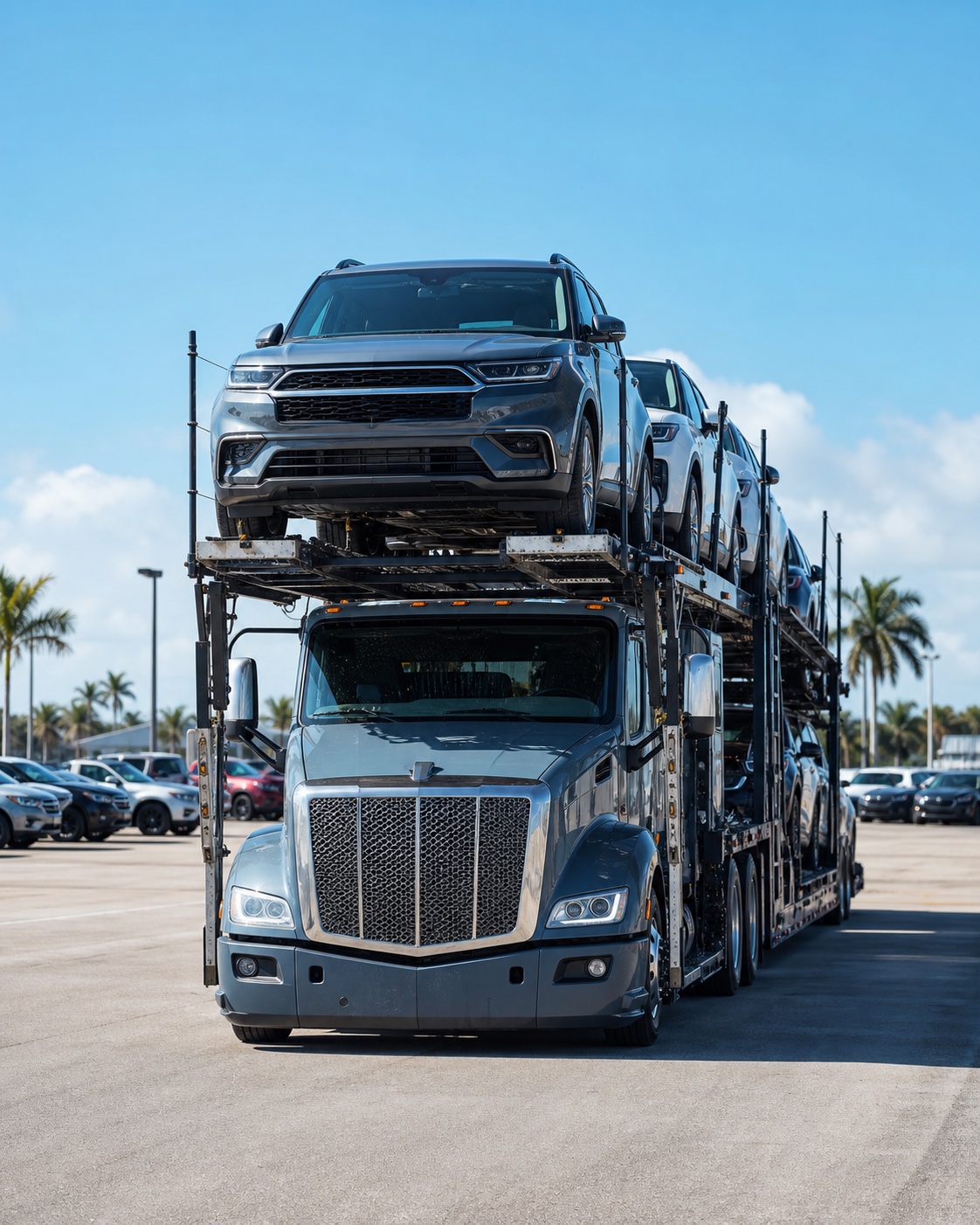
A carrier pickup is most efficient when the vehicle, driver, and yard are working from the same plan. A few confirmed details can prevent the most common delays.
Send the vehicle list early
Provide the VIN or stock number for every vehicle, along with the buyer or account name used at drop-off. If the carrier will collect several units, put them in one list and note the preferred loading order when it matters.
Give an accurate condition report
Tell the carrier whether each vehicle starts, rolls, steers, and brakes. Mention flat tires, missing keys, low clearance, or visible damage that could affect loading. The transporter can then arrive with an appropriate trailer and plan.
Confirm timing and access
Share the expected arrival window and update the yard if the schedule changes. Include the full address and any arrival instructions the driver needs. For larger carriers, confirming practical access before dispatch helps avoid a difficult turn-around.
Verify loading support
If forklift assistance or yard loading is needed, arrange it before the truck arrives. Make sure both the transporter and yard understand which vehicles require assistance and who is authorizing the work.
Close the handoff
Before departure, confirm that the correct vehicles are loaded and that required documents or release information are complete. A short final check is easier than correcting a mix-up after the carrier leaves.