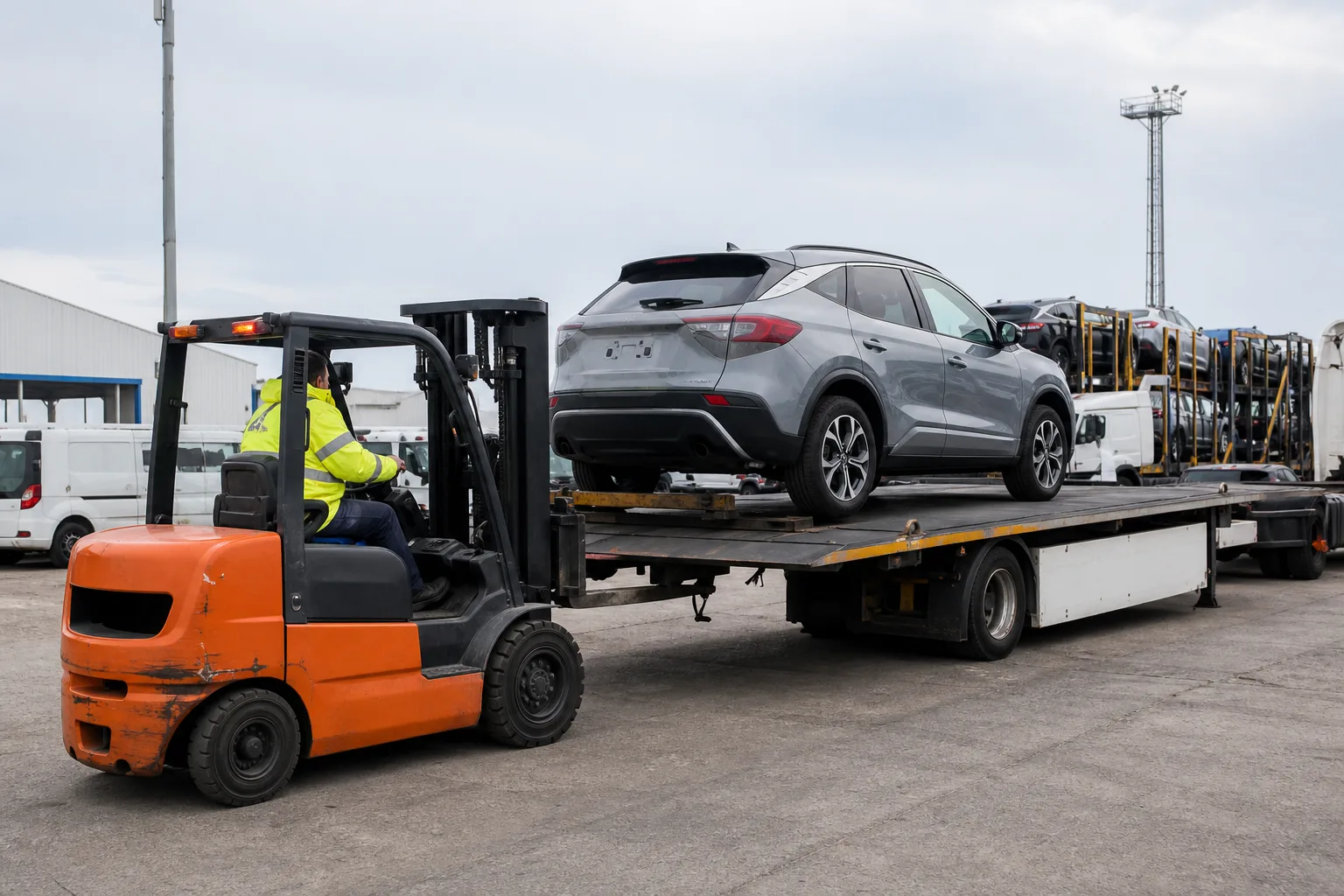
Damaged auction vehicles can require more planning than ordinary passenger cars. The goal is not to make the process complicated; it is to give the yard and transporter the same accurate information before equipment arrives.
Confirm the vehicle condition
Record whether the vehicle starts, rolls, steers, and brakes. Note flat tires, locked wheels, loose body panels, missing keys, and parts stored inside the vehicle. Photos from several angles can help identify clearance or loading concerns before the truck reaches the yard.
Identify the loading method
A vehicle that cannot drive onto a carrier may need forklift assistance or another loading plan. Confirm the vehicle weight and obvious damage, then ask the yard and carrier which method is appropriate. Do not assume that every transporter carries the same equipment.
Keep identifiers consistent
Use the same VIN, auction lot number, stock number, buyer name, and release information in every message. If several vehicles are being collected, send a single organized list and mark any unit that needs special handling.
Coordinate the release and arrival
Verify that the vehicle has been released before dispatching the carrier. Share the yard address, expected arrival window, driver details, and a contact method for changes. A short update when the truck is delayed can prevent unnecessary staging work.
Remove uncertainty before loading
Tell the transporter about vehicle size, condition, and loading requirements before the trip. Confirm who authorizes release and whether any documents must travel with the vehicle. A complete handoff protects time for the buyer, the yard, and the carrier.